Stop Wasting Time on Dumb AI Tools
Finding the best AI study app means looking past the hype and focusing directly on retrieval practice, algorithmic scheduling, and seamless integration.
The Exploding Market of Educational AI
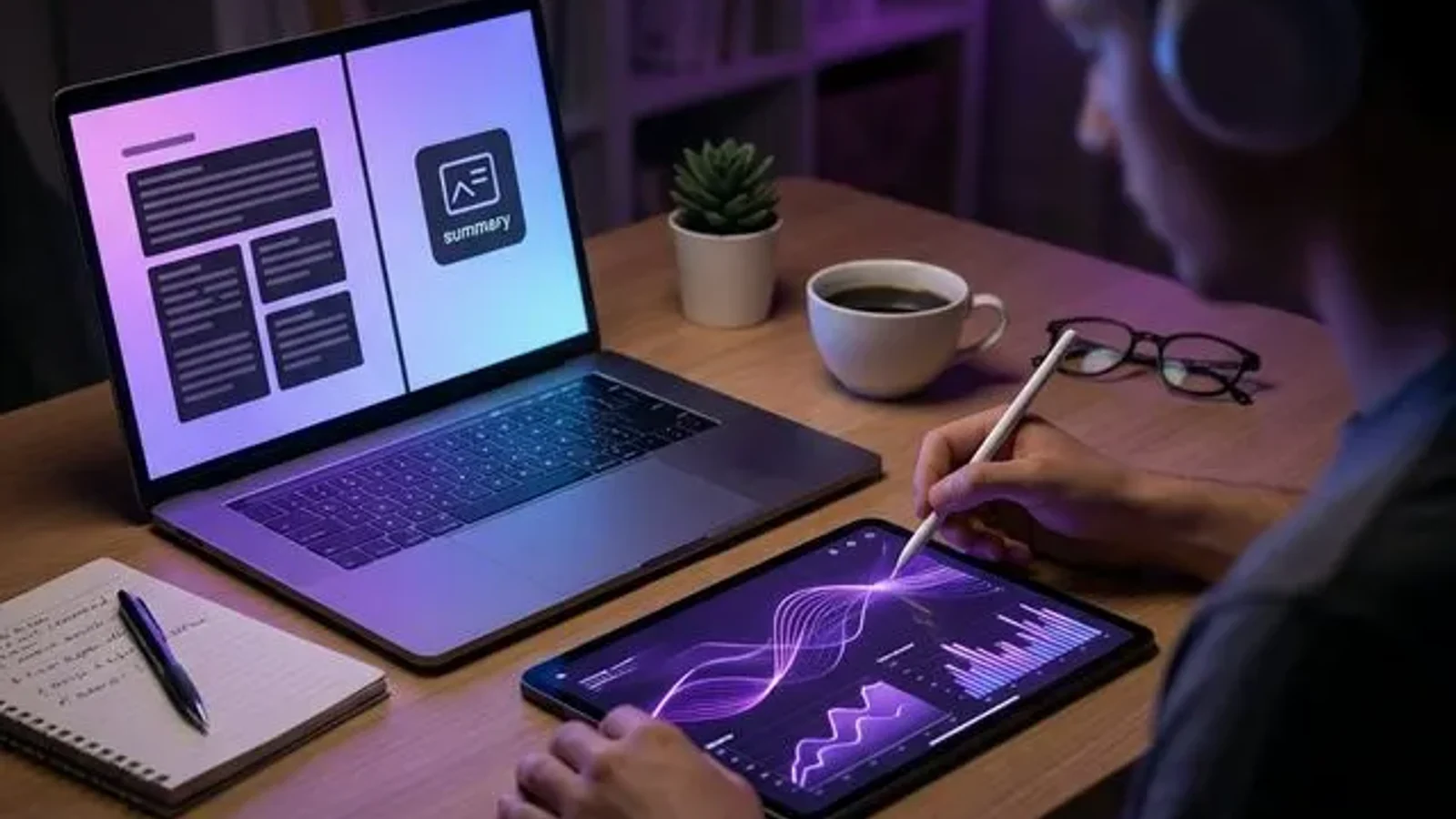
In the past few years, the market for educational software has been completely overrun by artificial intelligence. Walk into any college library today, and nearly every screen will have some sort of LLM-powered tool open. The promise is incredibly alluring: upload your textbook, click a button, and understand the material. But for students whose scholarships and career prospects depend on their GPAs, this flood of new software presents a dangerous trap.
The reality is that 90% of the tools claiming to be the best ai for study are nothing more than simple ChatGPT wrappers. They offer generic summarization or act as a basic chatbot that you can question about your syllabus. While a quick summary is marginally helpful for skimming a reading assignment, it does absolutely nothing to ensure that the information makes it into your long-term memory.
If you want to survive a pre-med track, a demanding engineering curriculum, or rigorous law classes in 2026, you cannot rely on passive AI summarization. You must utilize tools designed specifically around proven cognitive science principles. This means seeking out platforms that force you into active recall and manage your spaced repetition scheduling automatically.
The shift from passive reading to active retrieval is the single most important academic transition you can make. The software you choose must facilitate this shift effortlessly, removing the logistical friction of organizing hundreds of flashcards so you can focus entirely on cognitive engagement.
Core Features of a Top-Tier Platform
When evaluating which software truly earns the title of best ai study app for college students, you must look beyond the marketing copy and analyze the core feature set. First and foremost is the inclusion of active recall ai generation. The platform must be able to instantly read a dense 40-page PDF chapter and accurately generate high-quality question-and-answer flashcards.
This generation cannot be shallow. The AI must be capable of identifying the nuanced, underlying concepts, not just defining bold vocabulary words. Furthermore, it must allow you to edit and customize these generated cards because the act of personalizing the material is a crucial first step in the learning process.
The second non-negotiable feature is a robust, mathematically sound spaced repetition algorithm. The best spaced repetition app will completely manage your review schedule. It should track your individual performance on every single card and calculate the exact optimal moment for your next review. If the app just lets you flip through cards randomly or relies on rudimentary scheduling, it is actively wasting your study time.
Finally, the platform must offer seamless multimodal input. As a student, your knowledge sources are fragmented across physical textbooks, recorded zoom lectures, PDF slideshows, and handwritten notes. An elite AI study application acts as a centralized brain, allowing you to upload all these disorganized formats and standardizing them into a single, highly structured deck of active recall items.
Why Dedicated Apps Outperform General LLMs
A common question among freshmen is: 'Why do I need a specialized study app when I can just paste my notes into a free general-purpose AI model?' It is a valid question, but utilizing a general LLM for serious academic study is like trying to build a house using only a Swiss Army knife. It's theoretically possible, but it lacks the specialized efficiency required for the job.
A general LLM does not natively incorporate spaced repetition. It cannot track which specific facts you struggled with last Tuesday and automatically prompt you to review them today. It cannot act as a dedicated ai tutor app that understands the context of your entire semester schedule and prioritizes material based on an upcoming midterm date.
Furthermore, dedicated educational platforms are specifically tuned for accuracy and pedagogical structure. General models are notorious for 'hallucinations'—confidently presenting incorrect information as fact. When studying for an organic chemistry exam, a subtle hallucination regarding a molecular structure can cost you a letter grade. Specialized study AIs are constrained by the documents you provide, generating flashcards based strictly on your professor's source material rather than the chaotic open internet.
Choosing specialized software means investing in a workflow built explicitly for your primary goal: retaining complex information for long periods and retrieving it flawlessly under pressure.
The App Evaluation Checklist
Do not commit your entire semester's coursework to an application without rigorously evaluating it first.
Use this checklist to test any new platform before making it the centerpiece of your study routine.
- Upload a highly technical chapter from your syllabus to test the accuracy and depth of the generated flashcards.
- Verify that the platform utilizes a recognized spaced repetition algorithm (like SM-2 or FSRS).
- Check for cross-device synchronization; you need access to your review queue on your phone during commutes.
- Ensure the interface allows for rapid, frictionless manual editing of AI-generated content.
- Confirm that the platform allows you to export your data so you are never locked into a single ecosystem.
FAQ
Should I pay for a premium AI study app subscription?
If the application saves you 5-10 hours of manual flashcard creation per week, the subscription easily pays for itself in retrieved time. However, always utilize free trials first. Only upgrade if you find yourself using the platform daily and relying on its advanced scheduling features.
What is the difference between active recall ai and regular AI summarization?
Summarization condenses a 10-page text into a 1-page summary for faster reading. Active recall AI translates that 10-page text into 50 specific questions that force your brain to retrieve the information from memory, actively building neural pathways rather than just skimming.
Can these applications study for me?
No. The AI completely eliminates the administrative burden of setting up your study materials (creation, organization, scheduling). But the actual learning—the cognitive effort required to recall the answer and strengthen the memory—is entirely your responsibility.
Is it safe to upload my professor's proprietary lectures to these platforms?
You must review the specific app's privacy policy. The best platforms strictly sandbox user data, ensuring that your uploaded PDFs or lecture notes are not used to train global public models and are kept entirely private to your account.
The Best AI Study App for College Students in 2026: An Honest Guide
Find the best AI study app for college students. We review top platforms focusing on active recall AI, spaced repetition, and actual exam survival.